How to Repair a Crack in Drywall
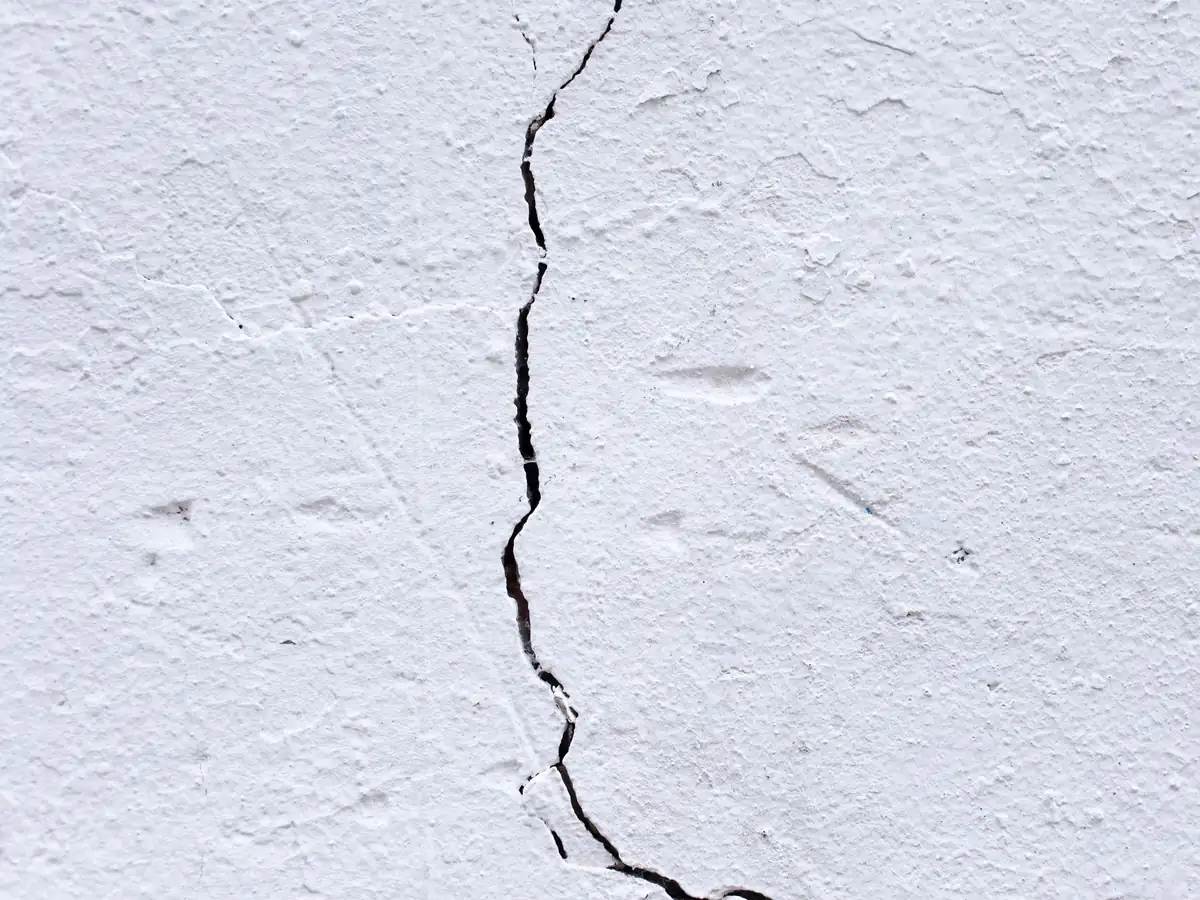
Cut the crack into a shallow V with a utility knife, fill it with setting compound, cover it with paper or mesh tape, then apply two thin, wide coats of all-purpose compound. Sand, prime and paint. Truly hairline cracks in the middle of a wall can be filled without tape, but any crack that has already come back once needs tape.
- Time
- 1–2 h of work over 1–2 days
- Skill
- Easy to moderate
- Drying
- 1–2 h with setting compound, 12–24 h with premixed
What you need
11 items needed · tick what you already own
- Cutting loose paper, scoring drywall, trimming torn tape and opening cracks into a shallow V.
- Seams, inside corners and recurring cracks. It's stronger than mesh once bedded properly.
- Self-sticking tape for cracks and flat patch seams. Easy for beginners because nothing has to be bedded first.
- Filling deep holes and gaps, the first coat over mesh tape, and repairs you want to finish in one day.
- Skim coats over patches and tape, and feathering repairs wider. Sands easily.
- Bedding tape, first coats over patches and cracks, and most repairs up to about 4" wide.
- Wide final coats that feather a patch or seam into the wall so it disappears under paint.
- Holding a working amount of compound so you can load and clean your knife on its edge.
- Sanding small patches by hand with less dust and fewer gouges than sandpaper.
- Raking light across the wall shows ridges and dips you can't see in normal light.
- Sealing patched compound so paint doesn't look dull over it (flashing), and blocking water stains.
How to repair a crack in drywall
Before you cut, scrape or sand: in a home built before 1980, old joint compound and texture can contain asbestos, so have them tested by an accredited asbestos professional first (EPA). If the home was built before 1978, test the paint for lead before you sand or scrape it (EPA). Before cutting into a wall or ceiling, turn off power to nearby outlets, switches and fixtures and check for wires and pipes.
- Open the crack. Run a utility knife along the crack at an angle on each side to cut a shallow V about ⅛" deep. This removes loose material and gives the filler a solid edge to grip. Scrape off any flaking paint or old filler. If a seam's tape is loose, cut out the loose section completely.
- Fill the V. Mix a small batch of 20 or 45 minute setting compound. Press it into the V with a 6" knife and scrape flush. Setting compound bonds better than premixed and shrinks very little, so it won't sink back into the crack.
- Tape it. For paper tape, spread a thin bed of compound 3–4" wide along the crack, press the tape in, and pull a 6" knife along it firmly to squeeze out the excess. For mesh, stick it on over the filled crack. Center the tape on the crack. Follow a jagged crack with short overlapping pieces rather than one long strip.
- Cover the tape. Apply a thin coat over the tape with a 6" knife, just enough to hide it. Let it set or dry.
- Feather it out. With a 10" or 12" knife, apply one or two more coats, each 2–3" wider than the last. A taped crack ends up 10–14" wide. That width is what hides it.
- Sand, prime and paint. Sand lightly with a fine sponge, check with a work light held flat to the wall, prime, then paint.
Why drywall cracks come back
A crack is the wall telling you where it moves. Fill it with spackle alone and the next round of movement splits the same line. Where the crack is tells you why it's there.
| Where the crack is | Usual cause | Fix |
|---|---|---|
| Straight line along a seam | Weak or dry tape joint, seasonal movement | Re-tape the seam |
| Diagonal from a door or window corner | Stress at the corner of the opening, settling, door slamming | V-cut, tape, feather wide |
| Wall-to-ceiling corner, opens in winter | Truss uplift (roof trusses arch up in winter) | Flexible caulk or a floating corner, not tape |
| Fine spiderweb in a small area | Compound applied too thick, or shrinkage | Skim coat over it |
| Wide, growing, or with doors sticking | Foundation or framing movement | Have it checked before you patch |
Cracks often show up in the first year or two of a new house as the framing dries and settles. Those usually stop once the lumber reaches equilibrium, and one good taped repair fixes them for good.
Mesh tape vs paper tape for cracks
Both work. They suit different cracks.
- Paper tape is stronger and doesn't stretch. It's the better choice for seams, door and window corners and any crack that has returned. Bed it in compound, not on dry wall.
- Self-adhesive mesh tape sticks straight on, so it's easier for a beginner. Mesh can stretch slightly, so cover it with setting compound, which is harder than premixed, to keep the crack from telegraphing through.
- Drywall crack repair kits usually contain a roll of mesh tape, a small tub of compound and a plastic knife. They work for a crack or two. A 6" steel knife and a bag of setting compound give a better result.
More on tape types in drywall tape.
Older homes: in homes built before 1980, have old joint compound tested by an accredited asbestos professional before you cut or sand it. EPA advises against taking samples yourself. If your home was built before 1978, test the paint for lead before you scrape or sand it (EPA, Lead-Safe Practices for Do-It-Yourselfers, checked November 2026).
Fixing hairline cracks without tape
A hairline crack in the field of a wall (not on a seam or corner) is often just a shrinkage crack in the paint or a thin skim. You can fix it without tape:
- Widen it slightly. Drag the corner of a putty knife or a utility knife along the crack so filler can get in.
- Fill it. Press setting compound or lightweight spackle into the crack and scrape flush.
- Skim over it. When dry, apply a thin, 4–6" wide coat of all-purpose compound over the line. Sand, prime and paint.
If it comes back, it's moving. Tape it next time.
Cracks where the wall meets the ceiling
A crack along the top of a wall that opens in winter and closes in summer is usually truss uplift. In winter the top of each roof truss sits in cold, damp attic air and swells slightly, while the bottom stays warm and dry under the insulation. The truss arches up and lifts the ceiling away from interior walls. It isn't a structural problem, but tape and compound will crack again every winter.
- Easiest fix: scrape out the old filler, then run a bead of paintable, flexible acrylic latex caulk (a siliconized type rated for movement) into the corner. Smooth it with a wet finger and paint. It stretches as the ceiling moves.
- Trim fix: nail crown molding to the ceiling only, not the wall. The molding moves with the ceiling and hides the gap.
The full ceiling version is in ceiling drywall repair.
When a crack means structural movement
Call a structural engineer or foundation contractor before patching if you see wide cracks, cracks that are getting longer or wider over weeks, stair-step cracks in block or brick, doors and windows that suddenly stick, sloping floors, or cracks that are wider at one end. A drywall patch won't fix any of those, and covering them hides the evidence someone needs to see.
A simple way to check: draw a pencil line across each end of the crack and write the date. If it grows past the marks over a few weeks, it's active.
Related repairs
- Ceiling repairCeiling drywall repair step by step: fix ceiling cracks, patch holes from fixtures, work safely overhead, handle…
- How to patch drywallHow to patch a hole in drywall: the right method for nail holes, doorknob holes and big holes, the tools you need,…
- Small holesHow to patch small holes in drywall with spackle: nail holes, screw holes, anchor holes and dents up to 1½". When…
- Large holesHow to patch a large hole in drywall with repair clips, wood backer strips or a California patch. Steps, tools and…